 Seoul Tree Map
Why Do Street Trees Get Their "Heads" Cut?
Street Tree Complete Guide Series #3
Winter Street Trees Looking Bare - Why Is That?
When walking down the street in winter, you've probably seen street trees with only bare branches remaining, right? Have you ever wondered, "Why did they cut them like that?"
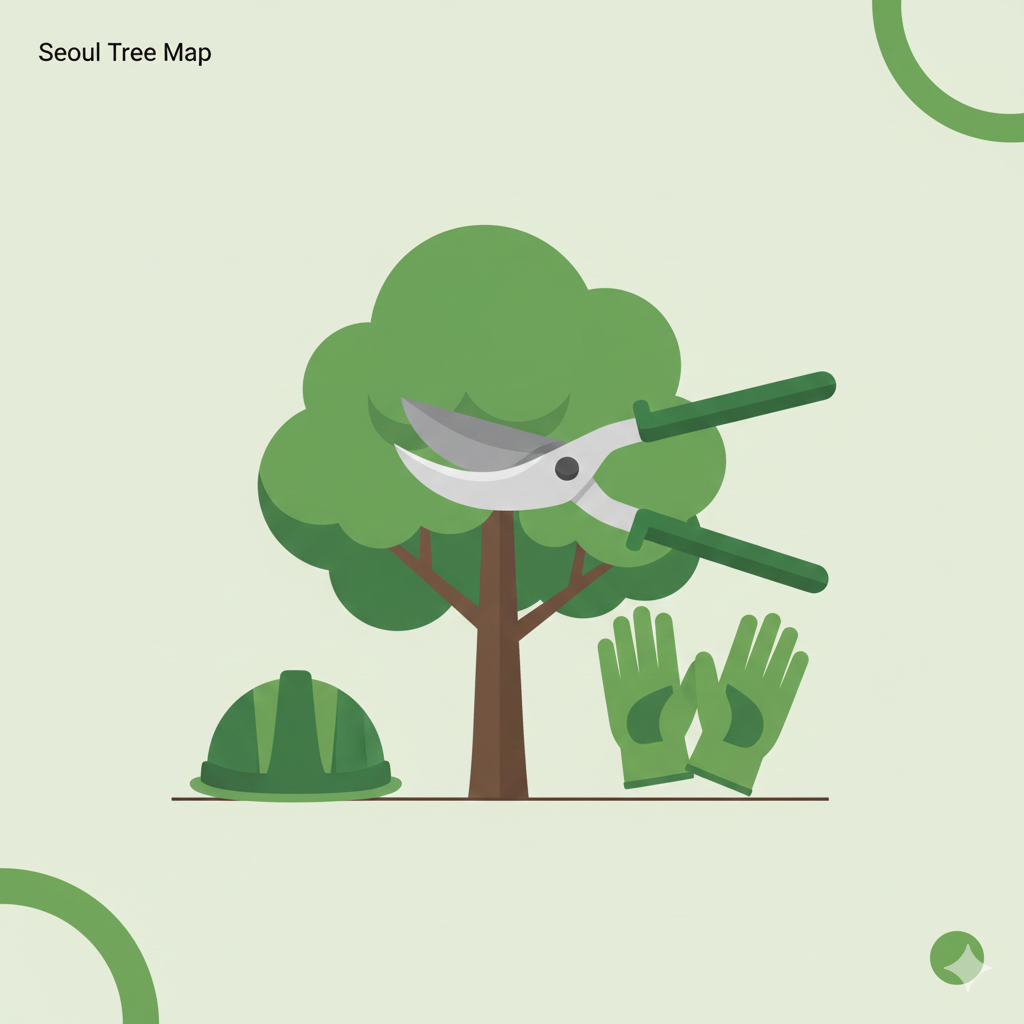
Cutting tree branches is called 'pruning' or 'tree trimming.' It's not just random cutting - it's essential work for the health and safety of trees.
Why Do Branches Need to Be Cut?
1. To Avoid Contact with Power Lines
Cities have lots of electrical wires, right? If trees grow too large, they can touch power lines. It's especially dangerous when they contact high-voltage lines! That's why trees near power lines need height control.
Usually, utility poles extend about 13.5m above ground, and high-voltage lines are at about 13m height. So street trees are maintained at around 10m height, with a maximum of 12m growth.
2. To Keep Traffic Lights and Signs Visible
When trees become too dense, they can block traffic lights or road signs. Branches are trimmed to ensure these safety features remain visible to drivers and pedestrians.
3. To Reduce Typhoon Damage
During summer typhoons, trees can fall over or branches can break. Trimming branches beforehand reduces wind impact and minimizes damage.
4. For Tree Health
Just like people feel healthier after a haircut, trees grow more healthily when unnecessary branches are removed. Cutting away dead or diseased branches makes the entire tree stronger.
5. To Maintain Attractive Shape
Trees need to maintain attractive shapes for good urban scenery. Pruning helps shape the trees properly.
Which Branches Should Be Cut?
You can't just cut any branch! There are specific branches that should be removed.
Branches That Should Be Cut
Dead branches: Obviously, branches that are already dead need to be removed.
Diseased branches: Branches affected by pests or diseases should be cut before they spread to other branches.
Water sprouts (suckers): Branches that suddenly grow long and straight. Their tissue is weak and breaks easily.
Root suckers: Small branches that emerge near the tree base. Leaving them weakens the tree.
Trunk sprouts: Small branches sticking out from the middle of the trunk also weaken the tree.
Crossing branches: Branches tangled with others look unsightly and can wound each other.
Downward-growing branches: Trees should naturally grow upward, so branches growing downward ruin the shape.
Inward-growing branches: Branches growing toward the tree's interior don't receive sunlight and don't grow well.
When Is Pruning Done?
Pruning isn't done at just any time.
Best timing: From after leaves fall until the end of February. During this time, trees are in 'dormancy' with minimal activity. Cutting during this period causes less stress to trees.
Sometimes in summer: Summer pruning is occasionally done to prepare for typhoons.
As needed: Branches blocking traffic lights or signs are removed as soon as they're discovered.
Different Trees Require Different Management
Cherry Trees
Cherry trees don't need much pruning. Just light trimming of unnecessary branches around November-December or March. Cherry trees can easily rot at cut sites, so wound sealant is applied when thick branches are cut.
Ginkgo Trees
Ginkgo trees in confined spaces are pruned annually. They're managed to stop growing once they reach the desired size. Ginkgos are trimmed into triangular or circular shapes.
For reference, when managing ginkgo trees, they're kept to a maximum of 12m to avoid contact with high-voltage lines (13m height). It's better to maintain them safely at around 10m.
Zelkova Trees
Zelkova trees have naturally beautiful shapes, so they're not heavily altered. Only crossing branches or water sprouts are lightly trimmed.
Metasequoia
Metasequoias also have naturally attractive shapes, so only dead or complex branches are removed. This maintains their natural pointed cone shape.
London Plane Trees (Platanus)
London plane trees grow quickly and produce many branches, requiring some management. However, instead of cutting everything back drastically, some smaller branches are left while maintaining an attractive shape.
How Pruning Is Done
Cutting Thick Branches
You can't just chop thick branches in one cut! This could tear the bark.
- First cut slightly from the bottom of the branch
- Then cut from the top
- This results in a clean cut
After cutting, wound sealant is applied to prevent bacterial infection.
Cutting Small Branches
When cutting small branches, the position of 'buds' is important. Buds are where new branches will emerge.
Cutting right above a bud can kill it, while cutting too far away can cause the remaining portion to rot. Cutting 3-5mm above the bud is just right.
Some Trees Shouldn't Be Pruned
Not all trees like pruning.
Trees requiring caution:
- Cherry trees, paulownia: Cut areas rot easily
- Maple trees, birch trees: They leak lots of sap when cut
- Pine trees, fir trees: New branches don't grow well from cut areas
- Zelkova trees, horse chestnuts: Shape can be easily ruined
Flowering Trees Require Special Attention
Flowering trees like forsythia, azalea, and cherry trees require careful timing for pruning.
These trees bloom next year on branches that grew this year. So if you cut branches in fall, you won't see flowers next spring!
Pruning should be done right after flowers fade or before summer to enjoy beautiful flowers next year.
Conclusion
Street tree pruning isn't random cutting - it's work that experts do carefully for tree health and safety, as well as urban beauty.
When you see bare-looking street trees in winter, think, "Ah, they trimmed their 'hair' so they can grow more healthily next year!"
Sources
Korea Forest Service, 「Street Tree Creation and Management Manual」, 2022